Owners · 7 min read
How to Book a Marriott Vacation Club Reservation for Friends & Family
MVC owners can reserve a villa for friends or family, either as a gift or for reimbursement. Learn how to make the booking, add the arriving guest correctly, and record the arrangement in writing.
Published May 31, 2026
Marriott Vacation Club owners can reserve a villa for someone else without traveling with them. It can be a generous use of surplus points for an anniversary, honeymoon, or family trip, but the reservation remains tied to the owner's account.
The process has two important parts: adding the arriving guest through Marriott's Guest of Owner procedure and agreeing in advance on payment, cancellation, and responsibility for charges. If you want to book a villa without owning, start with How to Rent an MVC Villa Safely.
Two ways to share a stay: gifting vs. renting
Mechanically, both work the same way. You book the villa on your account with your points and add your guest's name so they can check in without you. The difference is just whether money changes hands:
- Gifting: you cover the stay and hand over a vacation, with no payment and no expectation of repayment.
- Renting: your guest reimburses you, usually around your maintenance-dues cost on those points plus a little. Many owners do this to recover dues on points that would otherwise expire.
In both cases, you remain the owner of record. Marriott's rules and your potential liability do not change simply because someone else occupies the villa.
How to book it, step by step
The booking itself is the easy part. It's the same reservation flow you'd use for your own trip:
- Sign in to your owner account and search the resort, dates, and villa size your guests want, using Club Points (or your home-week reservation).
- Confirm the reservation as you normally would. You'll get a Marriott confirmation number, which shows on your upcoming reservations and on the guest-info page. Keep it: your guest will need it, and you'll reference it when adding their name.
- Add the guest to the reservation (next section) so the resort knows who's checking in.
Adding your guest's name (the Guest of Owner rules)
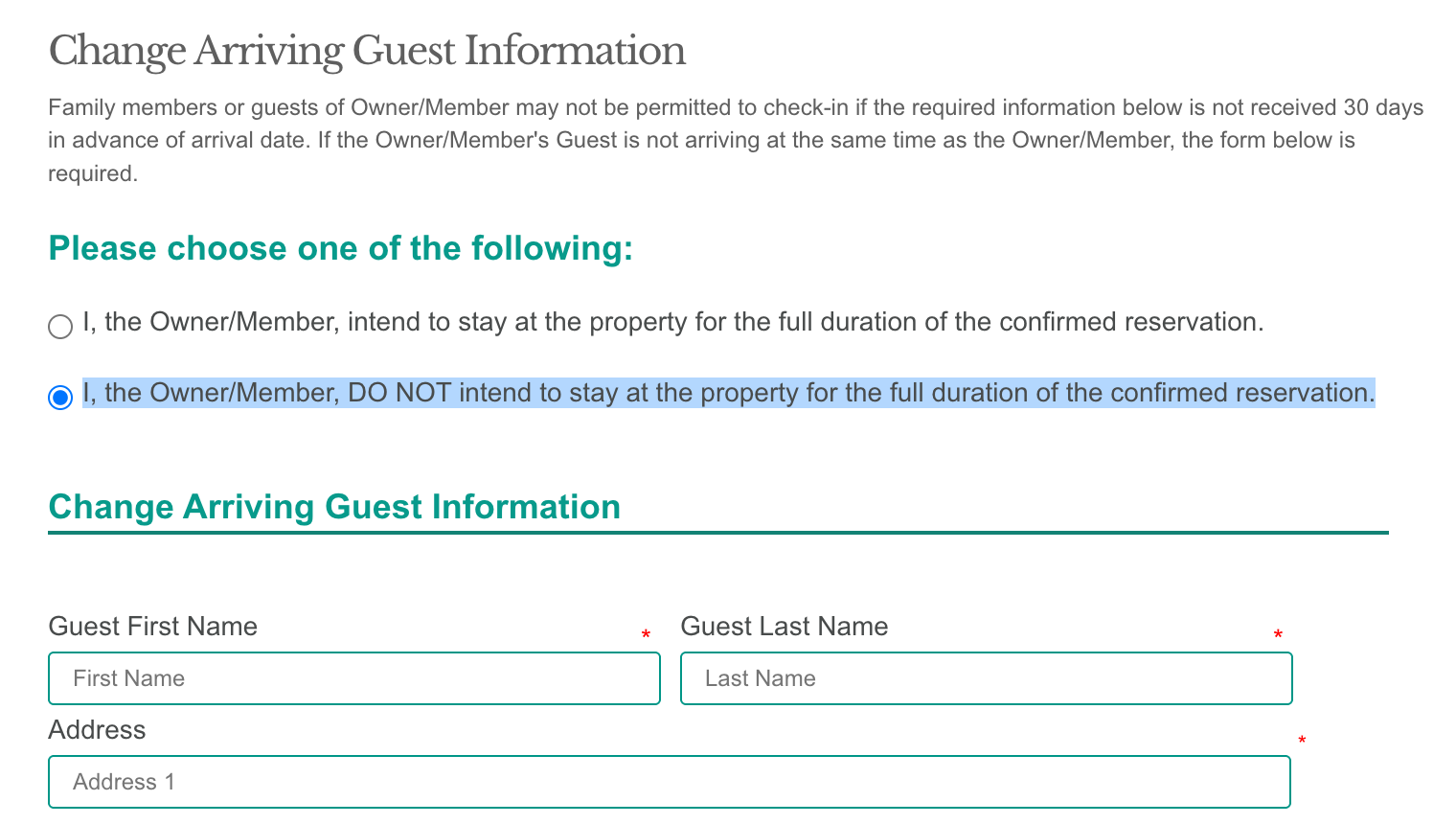
This is the step owners most often get wrong, and it's the one that decides whether your guest walks into their villa or gets stuck at the front desk. Marriott lets owners name the arriving guest so that person can check in without the owner present, but you have to do it properly and on time. From the owner site, open your upcoming reservations, click View on the relevant reservation, then click Change Arriving Guest Information in the guest profile section. On that form you choose the option stating you do not intend to stay for the full reservation, then enter your guest's name and details. A few things worth knowing as of 2026:
- Use the official channel. Adding the arriving guest through the owner site (or by calling Owner Services or the resort) is what counts. Adding a name informally on the Bonvoy side isn't always enough for a points reservation.
- Choose the right option. The form asks whether you, the owner, will stay for the full reservation. Pick the 'DO NOT intend to stay' choice when you're sending friends or family without you, then fill in the arriving guest's first and last name.
- Mind the 30-day rule. The form generally needs to be completed at least 30 days before arrival. Miss that window and the resort may not let your guest check in without you.
- Inside 30 days, call the resort. If you're adding a guest close to arrival, contact the resort directly to confirm exactly what they need rather than relying on the online form.
These rules change from time to time, so when in doubt, the resort's front-desk team is the source of truth for your specific stay. The cost of getting it wrong falls on your guest at the worst possible moment, so it's worth a phone call to be sure.
You're still on the hook
Because the reservation lives on your account, Marriott treats you as the responsible party. At check-in the resort takes a credit card from your guest for incidentals and tries to pin damage or unpaid charges on them first, so in the common case your guest covers their own mess. But you're the final backstop: if the charges aren't collected from your guest, it's your name (and potentially your card on file or your ownership standing) that's exposed. Most stays are completely uneventful, but the liability is real, and it doesn't disappear just because you're hosting family.
A written agreement is not an accusation of bad faith. It records how both parties expect to handle a cancellation, damage, or an unpaid charge before any of those issues arises.
Why a written agreement still helps with friends and family
A formal contract may feel excessive among relatives. A short agreement in plain language is usually enough to surface assumptions and prevent a later disagreement.
- Sets the money expectation in writing. If they're reimbursing you, put down the amount, what it covers, and when it's due, so nobody's guessing.
- Assigns responsibility for damage and incidentals. The guest agrees to cover charges they put on the room, which matters because the resort will bill you first.
- Spells out cancellation. Decide what happens to the money (and the points) if their plans change or yours do, since points reservations can be hard to undo.
- Names the basics: resort, dates, villa type, confirmation number, and who's actually staying, so there's a shared record if anything is ever disputed.
It doesn't need to be intimidating. A page in plain language, signed by both of you, is enough, and it's enforceable if it ever truly needs to be. If you'd like a model to start from, the rental agreement we use for every Book My Points booking covers exactly these points and works as a template even for a private, friends-and-family arrangement.
If money changes hands
When your guest reimburses you, use a payment method you understand. Even among family, a method with a paper trail beats cash you can't account for later (our guide to paying for a vacation rental safely compares the options). Rental income may be reportable, and the treatment of personal-use days depends on your circumstances. Owners who rent points regularly should discuss the arrangement with a tax professional.
Where Book My Points fits
You can book for friends and family on your own, and most owners do. But a couple of things we built help even when money changes hands directly between you. The rental agreement from the last section is one we facilitate free for every booking, so you're not drafting a contract from scratch or guessing at what it should cover. And our booking tools let the people you're hosting browse the real MVC resorts and villa layouts, and see how they differ from a standard Marriott hotel, so everyone agrees on the stay before you spend your points.
Book My Points does the most for the step beyond your personal circle: when you have points to spare and want to put them in front of vetted travelers you don't already know. We verify every guest, confirm the reservation with the resort, and back each stay with the same written rental agreement automatically, so renting to a stranger carries the same protections you'd build into a deal with family. When Book My Points holds the reservation payment, the owner isn't paid until after the stay, so we can protect the booking independently and neither side has to take the other on faith.
If you've got a use year you can't fully travel and you'd rather not let points expire, apply to become a Book My Points owner, or read more about how it works for owners.
Frequently asked
Can I book a Marriott Vacation Club villa for friends or family who aren't owners?
Yes. MVC lets owners make reservations for guests, including non-owners, by adding the guest's name to the reservation. The booking stays on your account and you book it with your points, so your guests don't need to own anything or join the club.
Does my guest have to check in with me, or can they check in alone?
They can check in without you, but only if you've completed Marriott's Guest of Owner process ahead of time. If you don't formally add the guest, the resort generally expects the owner to be present at check-in.
How far in advance do I need to add a guest's name?
Marriott's Guest of Owner form generally needs to be completed at least 30 days before arrival, or your guest may not be able to check in. Inside 30 days, contact the resort directly to confirm what they need, and don't assume it'll be handled at the desk.
Why would I need a rental agreement for friends and family?
Because the reservation lives on your account, you're the one Marriott holds responsible for damage, incidentals, and charges to the room. A short written agreement sets expectations about who covers what and what happens if plans change, and it keeps a money disagreement from becoming a relationship one, even when no money changes hands.
Is it legal to charge friends or family for an MVC stay?
Owners are permitted to let others use their reservations, and many recover maintenance dues by renting points. Money received may be reportable rental income. Ask a tax professional how the rules apply to your circumstances.